Conference networking has worked on luck for many years. You sat next to someone interesting at a keynote, ran into a potential partner at the coffee station, or exchanged cards with exactly the right person in the hallway. It was valuable when it worked, and wasteful when it didn’t.
The problem was the absence of a system to make those connections happen intentionally. AI is closing that gap fast. It has moved into conference networking as the infrastructure behind smarter interaction.
We are seeing the complete rebuild of how attendees discover each other, schedule meetings, sync calendars, and continue conversations beyond the event. Today, AI-driven networking recommendations are improving attendee satisfaction by 27%. Moreover, AI matchmaking at events leads to a 3× increase in connections per attendee.
Networking at conferences is becoming more structured and purpose-driven. Let’s take a closer look at how AI is changing the way attendees network at conferences.
Networking Hurdles in Traditional Conferences
Think about what traditional conference networking actually looked like. An attendee arrives with a list of people they hope to meet and spends most of the day in sessions. They end up with a handful of business cards from conversations that happened in passing. Some of those connections go somewhere. Most of them fade within a week because follow-up never happens.
Some of the most common networking hurdles in traditional conferences are:
- Lack of structured matchmaking, which leads to random and often irrelevant interactions
- Limited visibility into attendee profiles and interests
- Heavy reliance on chance encounters rather than intentional networking
- Difficulty in identifying the right people to connect with quickly
- No built-in system for scheduling meetings efficiently
- Conversations that happen but rarely convert into follow-ups
- Overwhelming environments that make networking exhausting
- Missed opportunities for introverted or first-time attendees
Scheduling is another friction point. Busy schedules leave little room for spontaneous meetings, so many intended conversations never happen because there isn’t a system to coordinate availability.
How AI is Changing Networking in Conferences
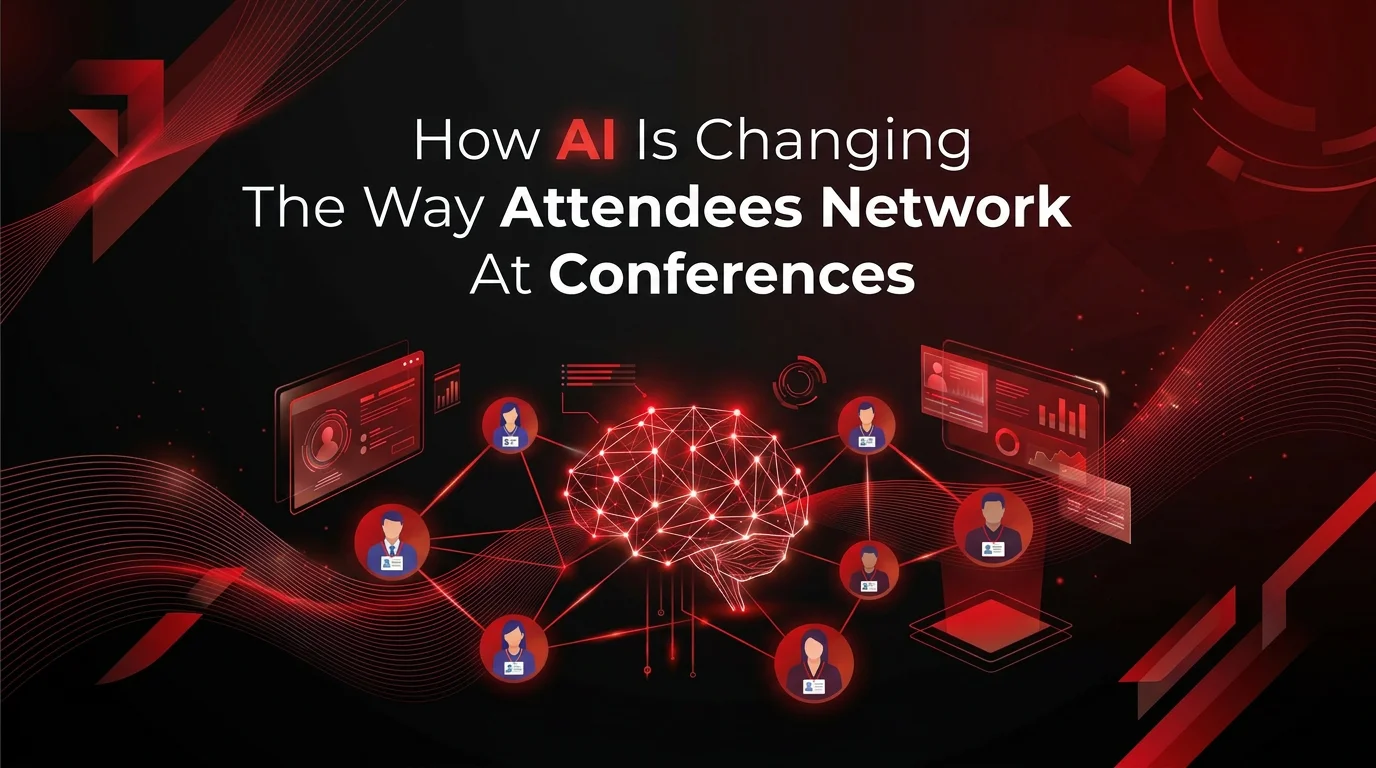
AI is not adding a layer of technology on top of conference networking. It is replacing the guesswork at its core. AI is doing the heavy lifting that organizers previously left to change.
The following are some prominent ways AI is changing how attendees network before, during, and after the conference:
1. Intelligent Matchmaking Before the Event Even Starts
The most immediate shift AI brings is moving matchmaking from the conference floor to before arrival. Attendees complete short preference surveys during registration, and AI cross-referencing those inputs with professional backgrounds and industry data to generate a curated list of relevant connections. So, the moment attendees walk through the door, they already know who to talk to.
2. Personalized Networking Recommendations in Real Time
AI continues learning from attendee behavior during the event. It tracks sessions attended, profiles viewed, interactions, and other metrics to refine recommendations on the fly. This enables:
- Dynamic suggestions of people to meet
- Recommendations for relevant discussions or groups
- Alerts about high-value networking opportunities nearby
Attendees are guided throughout the event based on what matters to them in real time. As a result, the suggestions an attendee sees on day two are smarter than those on day one.
3. Context-Aware Icebreakers for Better Conversations
Starting conversations can be difficult, especially in large events. AI provides useful context before interaction begins:
Attendees can see:
- Shared interests or industries
- Common sessions attended
- Mutual goals or connections
This reduces awkward introductions and allows conversations to begin with relevance.
4. Smart Meeting Scheduling and Calendar Syncing
Knowing who to meet is only half the problem. Getting a meeting on the calendar without endless back-and-forth is the other half.
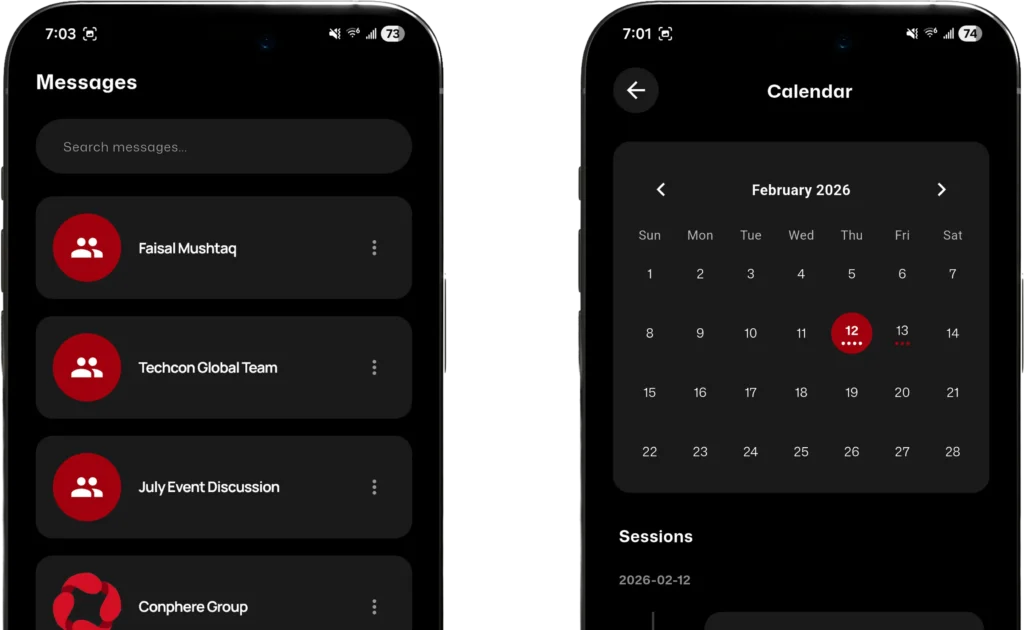
AI scheduling features suggest available time slots and propose on-site meeting locations based on where both attendees will be. It syncs confirmed meetings directly to calendars. What oncerequired back-and-forth coordination now takes one tap, so more meetings that get booked actually happen.
5. Session Recommendations That Strengthen Networking Relevance
Networking and content are more closely connected than most people realize. When two attendees are directed to the same session based on shared interests, they already have something specific to talk about before the conversation even begins.
AI uses registration data and past behavior to recommend the most relevant sessions for each attendee. This creates natural meeting points throughout the event.
6. Structured Networking Through Groups and Channels
Conferences create communities around tracks, topics, industries, and shared interests. Beyondone-on-one connections, AI conference platforms support group chats and challenges, givingcommunities a place to exist in real time.
Attendees can:
- Join topic-specific channels relevant to their session choices
- Participate in group conversations without waiting for a formal networking session
- Ask questions and continue discussions from sessions they attended
Networking is no longer confined to hallway moments or scheduled slots. It runs continuously in the background and gives every attendee a lower-pressure way to engage and be seen throughout the event.
7. Enhanced Sponsor and Exhibitor Engagement
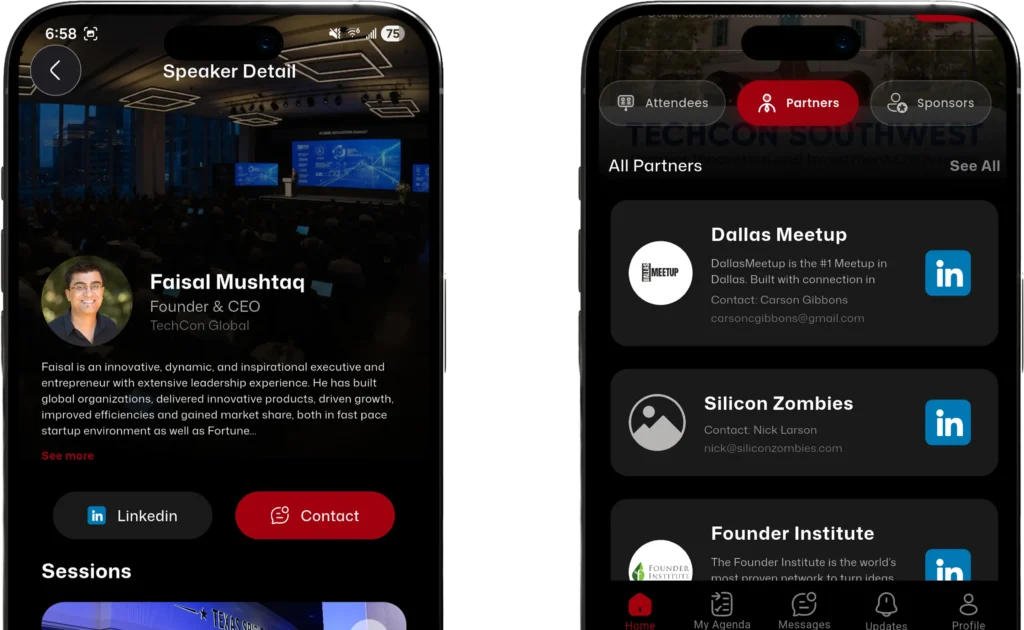
AI is also changing how attendees connect with sponsors and exhibitors. Attendees don’t have to visit all booths only to find the ones they are most interested in. AI recommends relevant sponsors based on attendees’ interests and behavior.
This leads to:
- More targeted interactions between attendees and sponsors
- Higher-quality conversations instead of random booth traffic
- Better ROI tracking for sponsors through measurable engagement metrics
- Personalized demo scheduling to match attendee availability and preferences
- Real-time feedback loops for exhibitors to adjust pitches
- Increased lead conversion rates by prioritizing high-intent matches
Sponsors are no longer guessing their impact. They can see who engaged and what value was generated.
8. Smart Contact Exchange
AI replaces business cards with digital contact exchange. Many platforms support QR-based contact exchange for fast in-person networking.
It ensures that connections are captured right away, without risking the loss of important details. On top of that, these contacts are organized and enriched with context, so follow-ups are easier and more effective.
9. Closing the Follow-Up Gap After the Event
The biggest failure point in conference networking has always been what happens after. Attendees leave with good intentions and return to their normal workload. The connections made over two days quietly disappear.
AI tackles this through:
- Automated post-event recaps summarizing who the attendees met
- Suggested follow-up actions
- Draft messages to help restart conversations without starting from scratch
This turns a conference into the beginning of an ongoing professional relationship, which is what most attendees were hoping for all along.
Conphere Is Built for This
Conphere brings AI-powered networking to a single, connected conference platform. Whether it is pre-event matchmaking, on-site meeting scheduling, group discussions, post-event insights, and more, every part of the attendee networking experience is built into the platform by design.
Key aspects of Conphere include:
- AI matchmaking, icebreakers, and suggested follow-ups built in
- 1:1 messaging, group chats, channels, and meeting scheduling with calendar sync
- QR-based contact exchange for fast in-person connections
- Organizer dashboards with real-time engagement visibility
- Post-event recaps and analytics that close the loop
Conclusion
Networking has always been the real reason most people show up to conferences. AI has not changed that reason. It has made the outcome far less dependent on being in the right place at the right time. So, the conferences that invest in smarter networking infrastructure will be the ones attendees keep returning to, because the value they walk away with is real and repeatable.
Don’t let your next conference networking depend on chance. Let AI drive networking with powerful platforms like Conphere.
Explore Conphere → | Sign Up Here