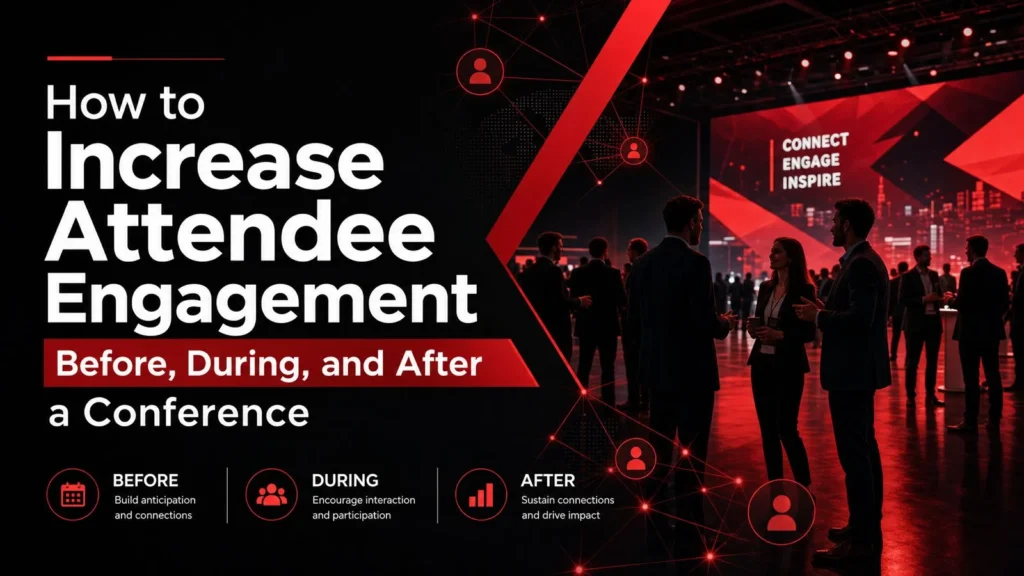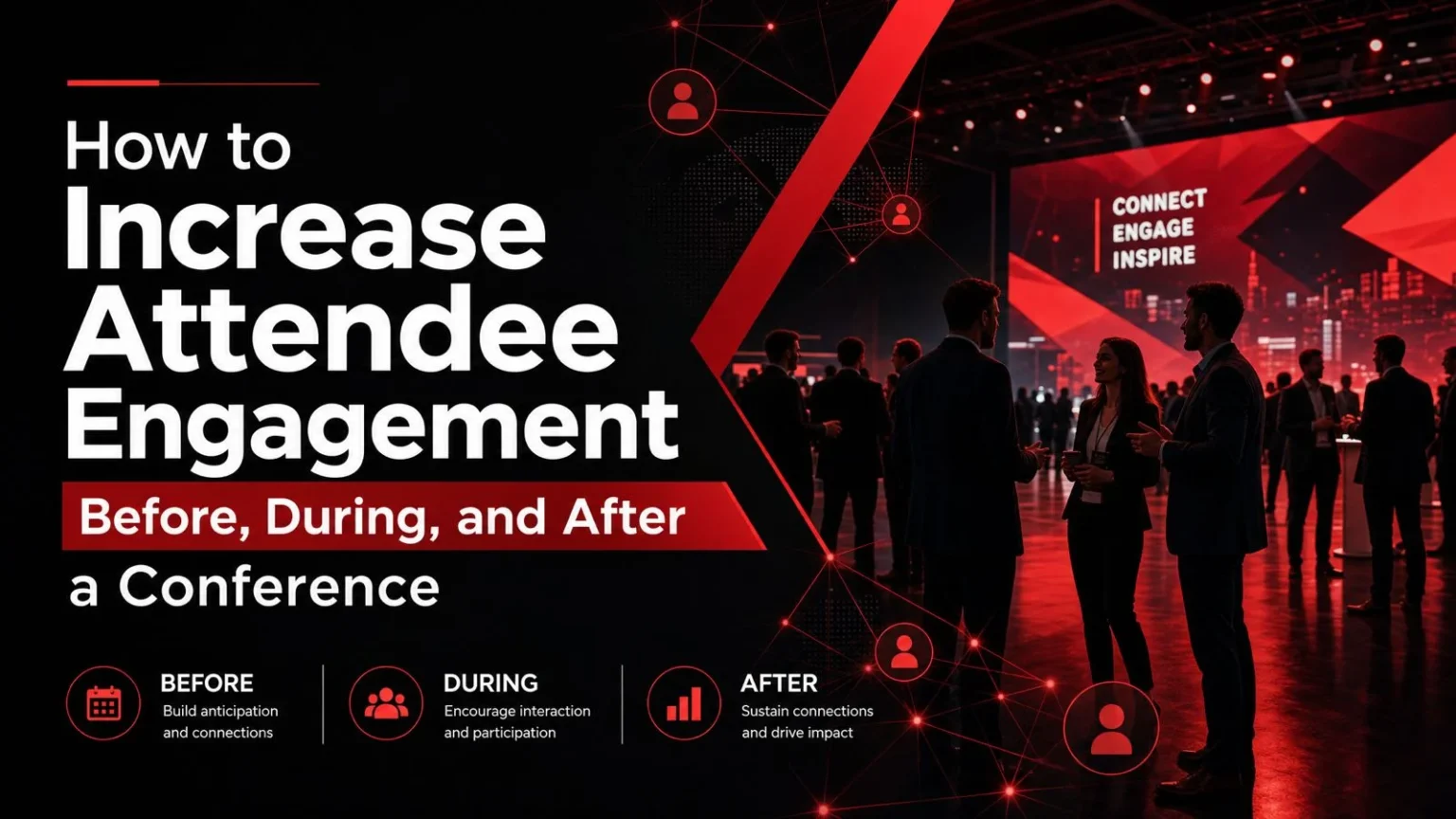
Attendee engagement is no longer a single moment that happens on the conference floor. The most successful events build engagement in three stages: before attendees arrive, during the event, and long after the final session ends.
Modern conference strategies focus on maintaining continuous interaction with attendees because engaged attendees are more likely to network, participate in sessions, interact with sponsors, return next year, and recommend the event to others.
According to a report from Cvent, personalization, networking, and mobile event technology are among the biggest drivers of attendee engagement today.
Why Attendee Engagement is More Important Than Attendance
A large registration number does not automatically indicate a successful conference. Organizers measure success by interaction signals such as networking activity, session participation, app engagement, and post-event follow-up.
One recent industry discussion noted that the best event teams now treat conferences as a lifecycle. They track attendee engagement before, during, and after the event to understand how attendees interact with the experience.
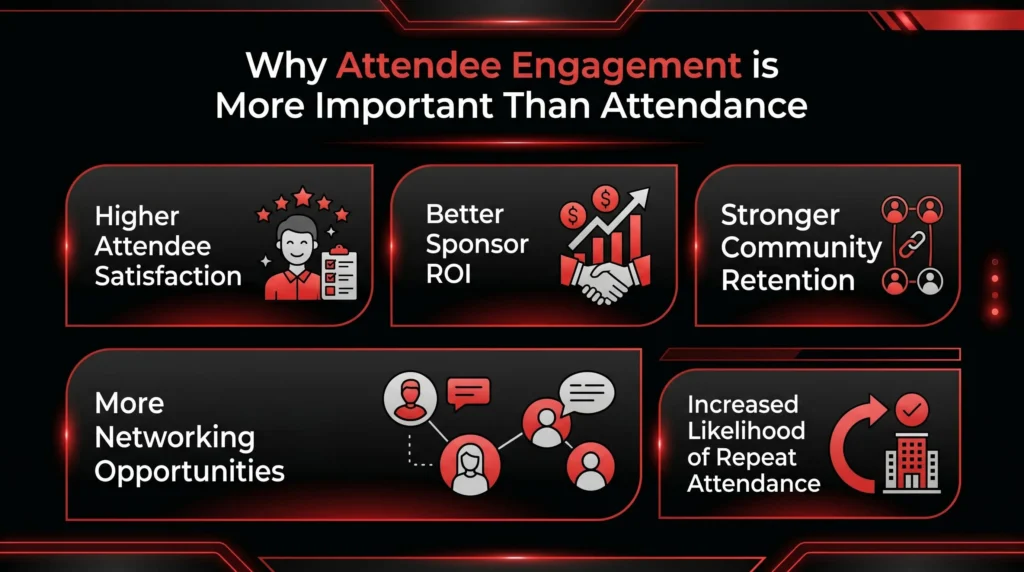
An attendee engagement creates:
- Higher attendee satisfaction
- Better sponsor ROI
- More networking opportunities
- Stronger community retention
- Increased likelihood of repeat attendance
The challenge is to build engagement throughout the attendee journey. The strategies below cover every stage of the attendee journey and what actually moves the needle at each stage.
How to Increase Attendee Engagement Before the Conference
Most attendee engagement issues begin long before the conference starts. If attendees register and then hear very little afterward, the event loses priority in their minds. Organizers who maintain engagement early through personalized updates and networking opportunities see stronger participation once the conference goes live.
1. Start the Conversation Before the Event Begins
Organizers often view the pre-event phase purely as a marketing window. However, promotional emails are broadcast, not engagement. Real pre-event engagement begins when attendees feel involved and mentally committed before arrival.
Some of the effective pre-event strategies include:
- Sending personalized agenda recommendations
- Allowing attendees to schedule meetings early
- Sharing speaker previews and session teasers
- Creating topic-based discussion channels
- Encouraging attendees to complete profiles beforehand
This turns the conference from something attendees “registered for” into something they are already participating in.
2. Use Personalized Communication
A first-time attendee and a returning one have different needs and expectations. Generic email blasts sent to the full attendee list treat both the same way. It also does not work well in grabbing attendee engagement for large conferences with diverse audiences.
Modern attendees expect personalization. You can segment communications by attendee type or track interest and send content that is actually relevant. Sending customized welcome emails and offering personalized agendas that speak to attendees’ goals signals that the event is designed with the individual in mind.
3. Build Networking Momentum
Networking works better when attendees do not start from a cold start on event day. Organizers should encourage introductions and meeting scheduling before the conference even begins.
Many conference management platforms, like Conphere, now support:
- Attendee discovery
- 1:1 messaging
- Meeting booking
- Community channels
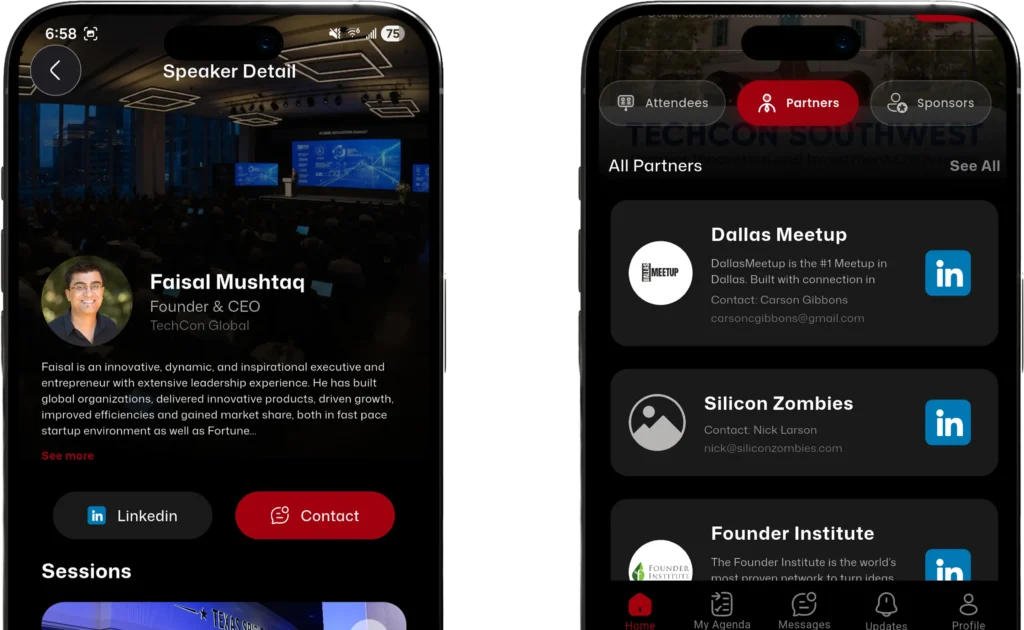
With this level of pre-networking, attendees arrive knowing who they want to meet.
How to Increase Attendee Engagement During the Conference
During the conference day(s), attendees’ attention becomes harder to hold because schedules are packed and distractions increase. Engagement during the event depends on how easy it is for attendees to participate, network, receive updates, and feel involved throughout the day.
4. Make Sessions Interactive
Attendees sitting in rows, listening to a speaker for 45 minutes without any opportunity to participate, will mentally check out. Passive attendance is the enemy of engagement.
Make sessions to have live Q&A, polls, gamification, workshops, and real-time feedback. These features help attendees feel involved instead of simply watching presentations. Interactive sessions also increase knowledge retention and networking opportunities.
5. Use a Conference App
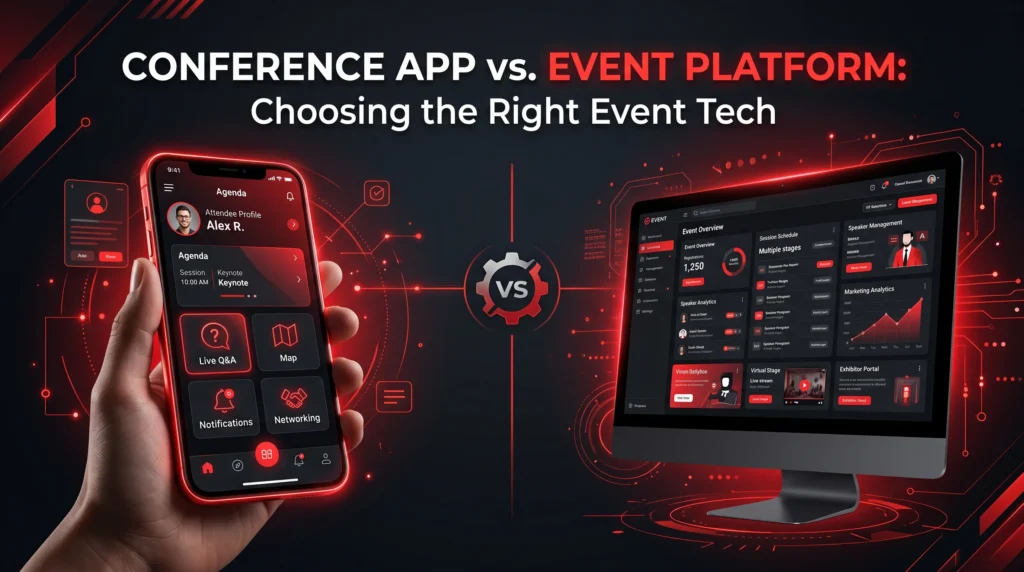
Every conference now must have an app to drive participation. A conference app provides a unified platform for attendees to navigate the event, access real-time updates, build their personal schedules, and connect with other attendees.
Conphere is a modern conference app that brings together everything attendees and organizers need in a single connected system. The core features include:
- Personalized agenda building with multi-track filtering and session reminders
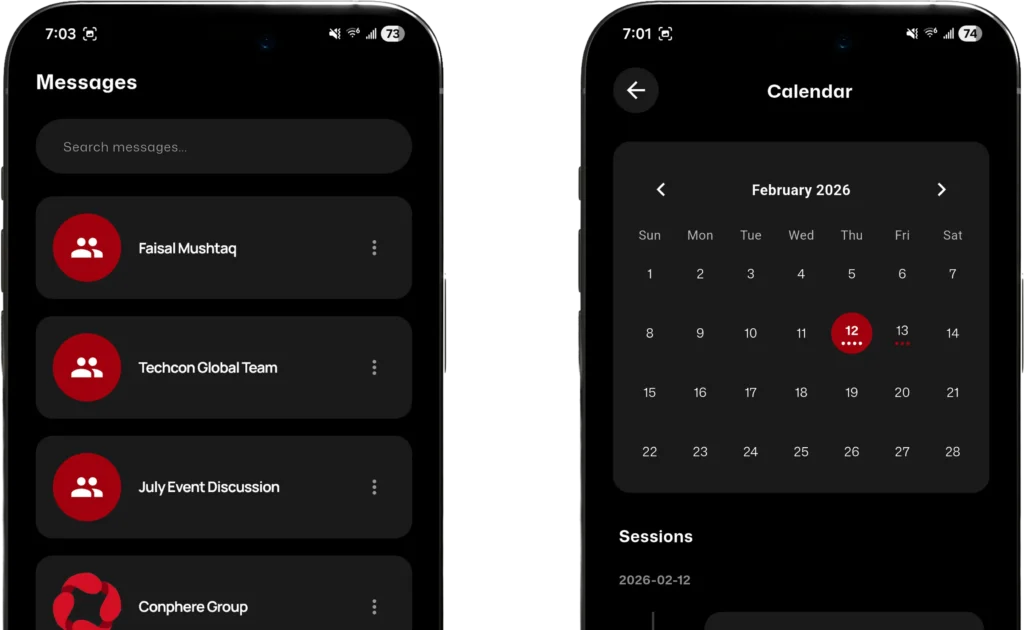
- 1:1 messaging, group chats, and moderated channels for continuous networking
- Meeting scheduling with calendar sync and QR-based contact exchange
- Real-time announcements and emergency alerts are pushed instantly from the organizer console
- Offline access so schedules and profiles remain available when the venue Wi-Fi drops
- AI matchmaking and session recommendations that improve throughout the event
- In-app session ratings and live feedback collection
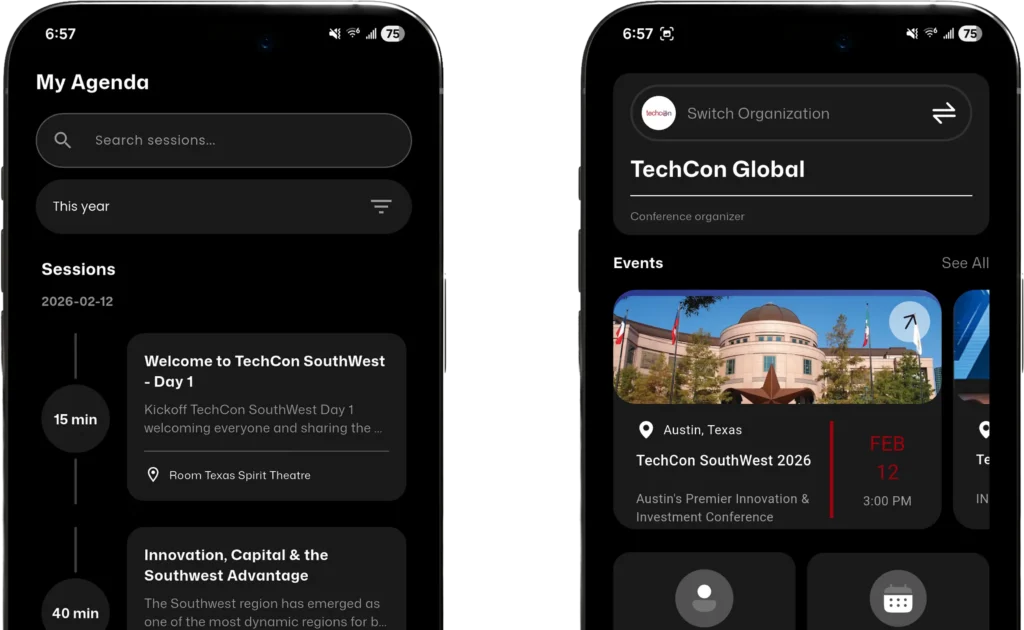
A conference app is becoming the crucial infrastructure on which the entire experience runs. And Conphere is one reliable app that ensures that infrastructure holds up when it matters most.
6. Build Structured Networking Opportunities
Many attendees are more interested in networking than in any other aspect of the conference. However, most conferences still leave it to chance. Organizers should use structured networking formats to improve attendee engagement and the quality of interactions.
Some effective approaches include topic-specific networking groups, AI-powered attendee matchmaking, roundtable discussions, scheduled networking sessions, in-app community channels, 1:1 meeting scheduling, QR-based content exchange, and more. Give attendees the tools to find the right people and watch more connections happening during the conference day(s).
7. Keep Attendees Updated in Real Time
Don’t make attendees struggle with finding sessions or receive updates late. These activities drop participation quickly. Deploy real-time communication tools that:
- Push live schedule changes
- Send reminders
- Share emergency alerts
- Highlight networking opportunities
- Promote active discussions
Attendees’ engagement naturally elevates when they feel part of the event flow.
How to Increase Attendee Engagement After the Conference
Most conferences lose attendee momentum the moment the event ends. However, organizers who maintain attendee engagement afterward turn the conference into a long-term community that is more likely to attend future events and act as free word-of-mouth marketing.
8. Send Follow-Ups That Reflect What Each Attendee Actually Did
A generic thank-you email sent to every attendee the morning after a conference is noise, not follow-up. The first 24 hours after an event are the highest-value window for re-engagement. What gets sent in that window should reflect what each attendee actually experienced.
Someone who attended a product session should receive the recording and the suggested next steps for that session. Someone who asked a question during a panel should receive a direct answer. Personalized recaps, built from real attendee behavior, convert better than broadcasts built on assumptions.
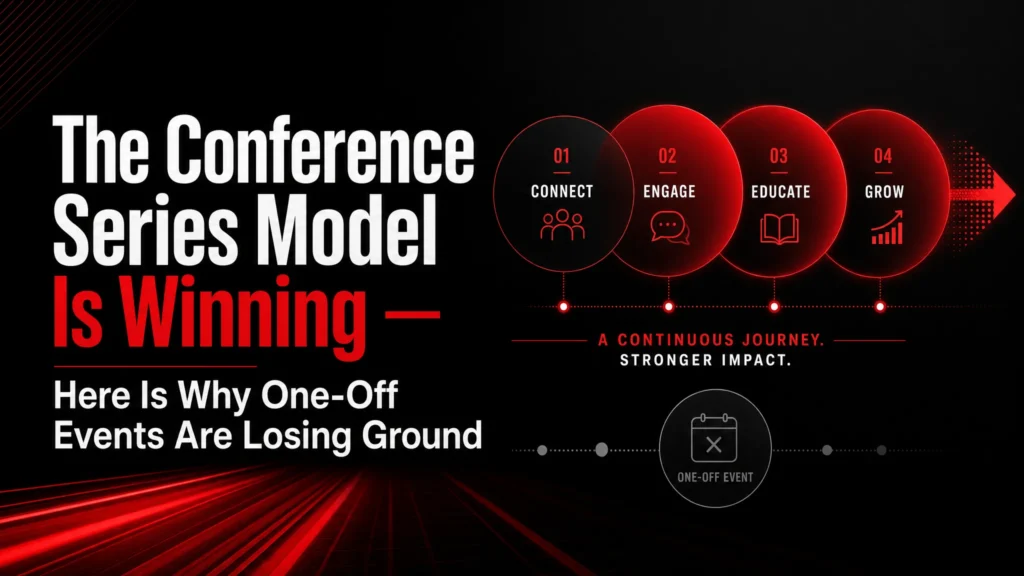
9. Treat the Conference as the Start of a Relationship
The organizers who build loyal attendee communities are the ones who stop thinking about events as single moments and start thinking about them as the opening of a longer conversation. Every session attended, every connection made, and every piece of feedback submitted is a signal. Those signals tell you exactly what each attendee cares about and what they are likely to engage with next.
The week after the conference is not the wind-down phase. It is the first week of the next cycle. Design your post-event communications around that rhythm, and the compounding effect on retention becomes measurable within a single conference series.
10. Act Visibly on the Feedback You Collected
Sending a post-event survey is standard practice. Communicating what you actually did with the results is not. That gap is a major missed opportunity.
When attendees see that a session format they rated poorly was dropped, or that the topic they most requested made it into the next edition, they develop genuine confidence that their input matters. That confidence is an underrated driver of return attendance. A short post-event email summarizing key changes made in response to feedback does more to build loyalty.
Conclusion
Every stage of the attendee journey is an opportunity. Before the event, build anticipation; during, drive participation; and after, convert a good experience into a lasting relationship. Most organizers invest the most in one stage and neglect the other two. Closing that gap in attendee engagement does not require more budget or more staff. It requires a consistent approach and the right platform to support it at every touchpoint